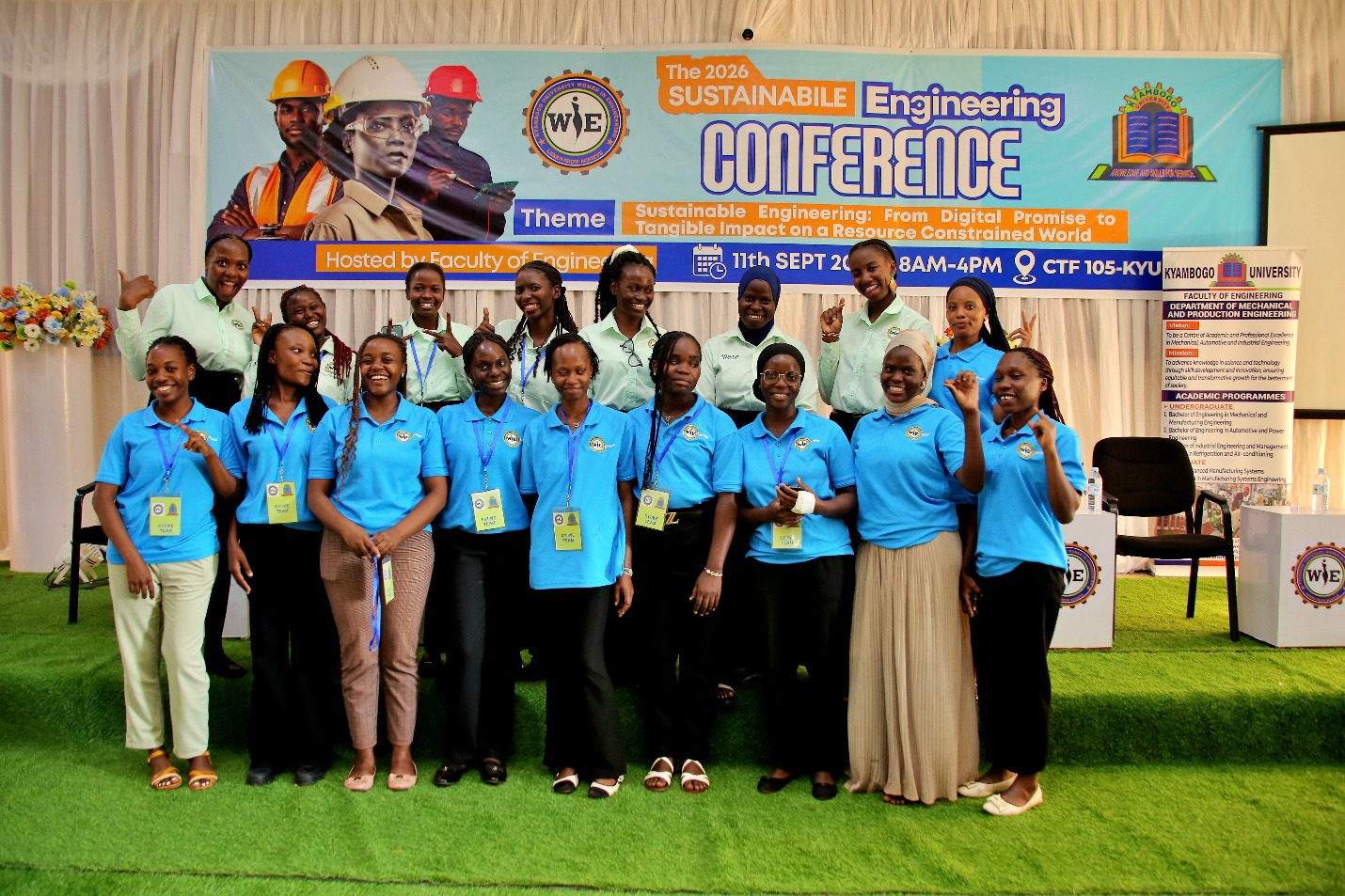
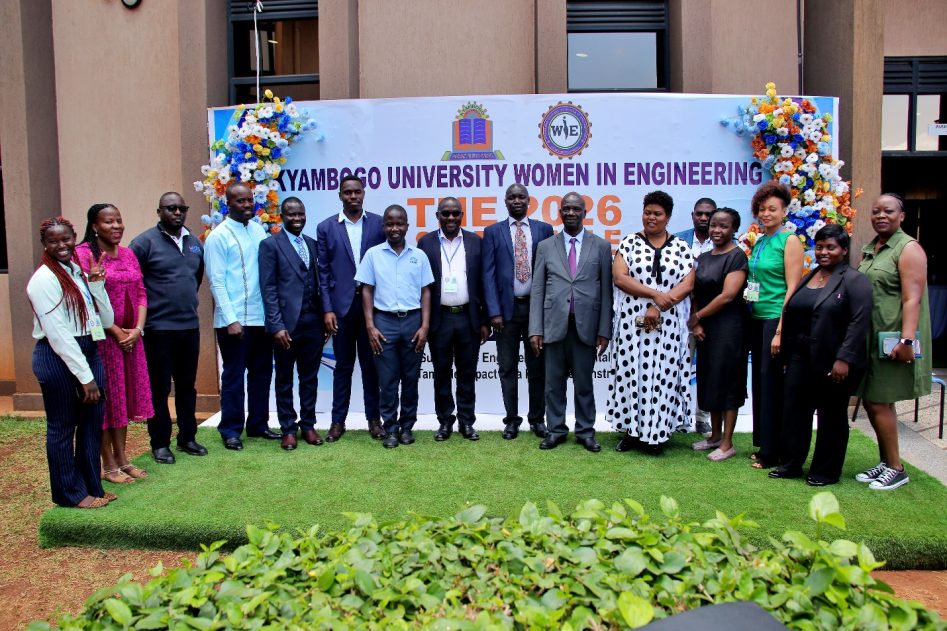
The 2026 Sustainable Engineering Conference, organized by the Kyambogo University Women in Engineering (KYUWE), was held with the primary objective of empowering the next generation of engineers to tackle global sustainability challenges. The conference brought together students, academic leaders, industry practitioners, and government representatives to discuss innovative solutions across three critical pillars: Green Materials & Infrastructure, The Energy-Water-Food Nexus, and the transition from Industry 4.0 to Industry 5.0 under the Theme: Sustainable Engineering: From Digital Promise to Tangible Impact in a Resource-Constrained World
The event was a resounding success, featuring a keynote address from the National Water and Sewerage Corporation (NWSC) Managing Director, two expert-led panel sessions, presentations on intellectual property and value addition, and a showcase of student innovations. The conference successfully facilitated networking, knowledge exchange, and a renewed commitment to sustainable engineering practices.
Opening Ceremony and Welcoming Remarks
The conference commenced with the arrival and registration of guests and students, managed efficiently by the KYUWE cabinet. The session opened with a prayer and the anthems, setting a formal and respectful tone.
- Welcoming Remarks: Ms. Suzan Kiiza, the KYUWE President, welcomed all attendees and expressed gratitude for the strong turnout, emphasizing the importance of the conference theme for the future of the engineering profession.
- Student Leaders Panel: A panel of student leaders from KYUWE engaged the audience, highlighting the role of students in driving sustainability initiatives within the university and beyond.
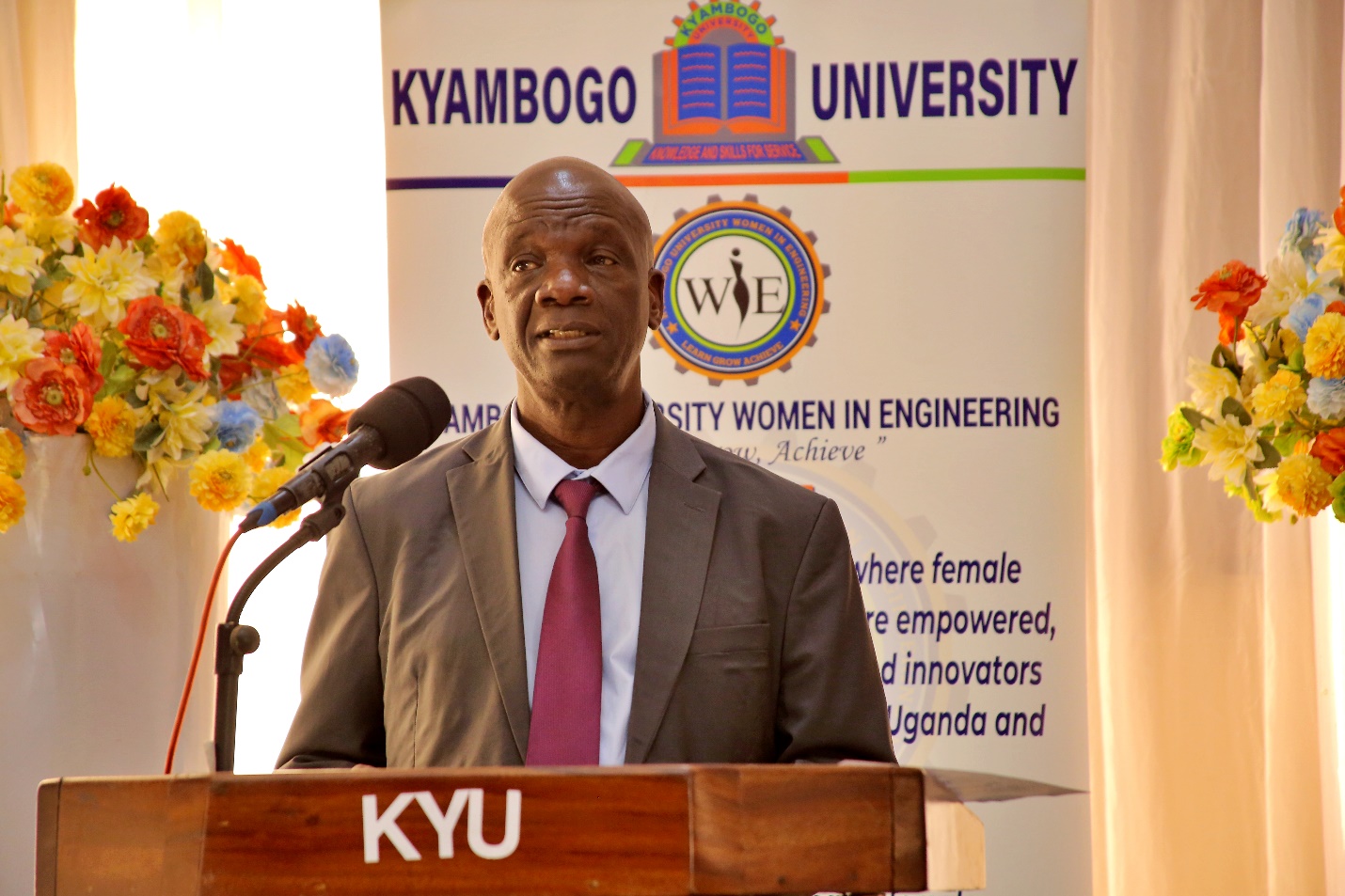
- Remarks from the Patron: Prof. Charles Onyutha, the Dean of the Faculty of Engineering and KYUWE Patron, delivered welcoming remarks. He stressed the faculty’s commitment to integrating sustainability into the engineering curriculum and encouraged students to use the conference as a springboard for innovative thinking.
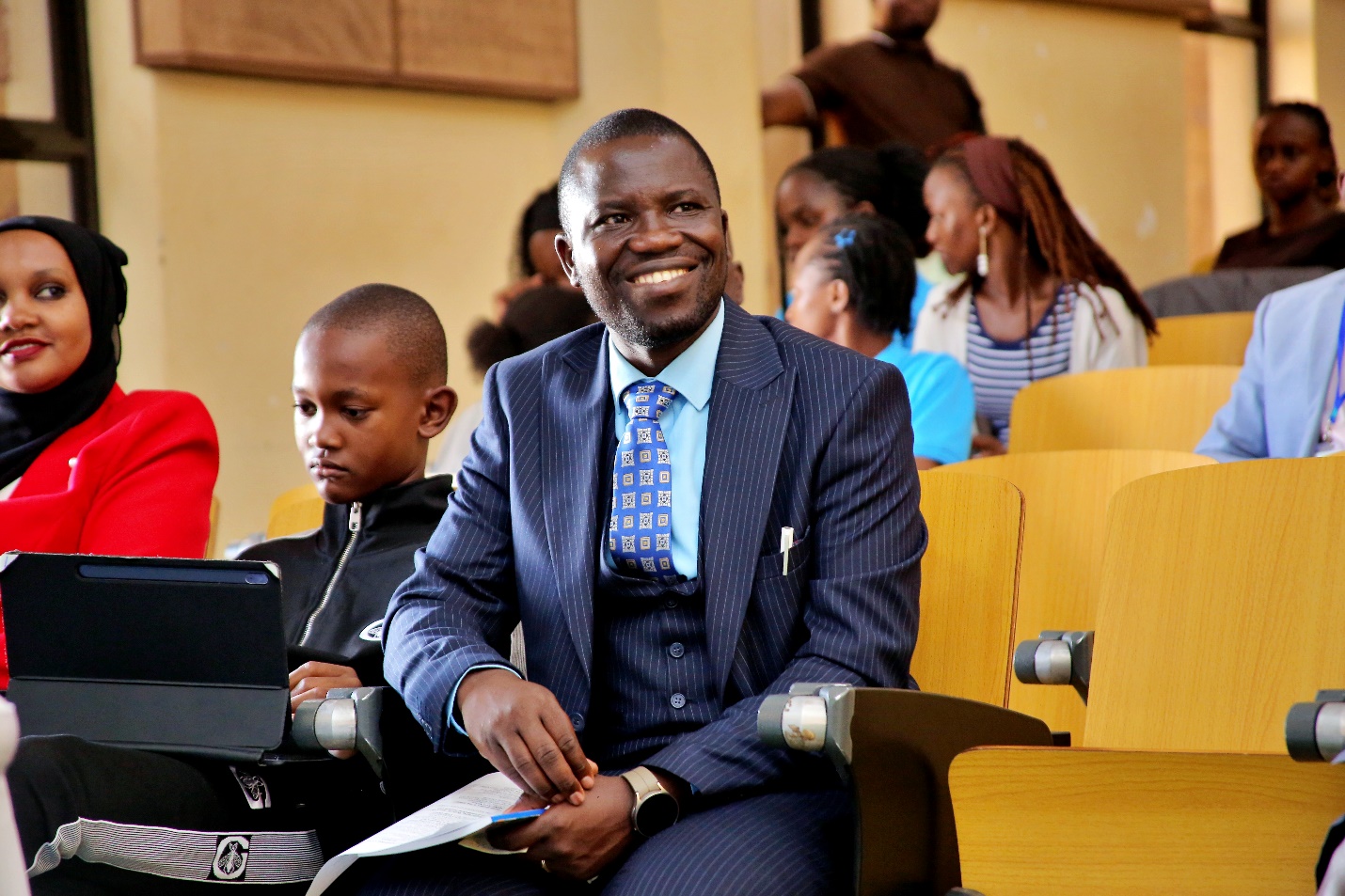
- Opening Ceremony Remarks: The Vice Chancellor, Prof. Eli Katunguka Rwakishaya, represented by the Deputy Vice Chancellor F&A- Prof. Justus Kwetegyeka, officially opened the conference. In his address, he underscored the university’s strategic focus on research and innovation that addresses societal needs, particularly in the area of sustainable development.
Keynote Address
Topic: Empowering Engineers for a Sustainable Future<br>Speaker: Dr. Eng. Silver Mugisha (Managing Director, National Water and Sewerage Corporation – NWSC)
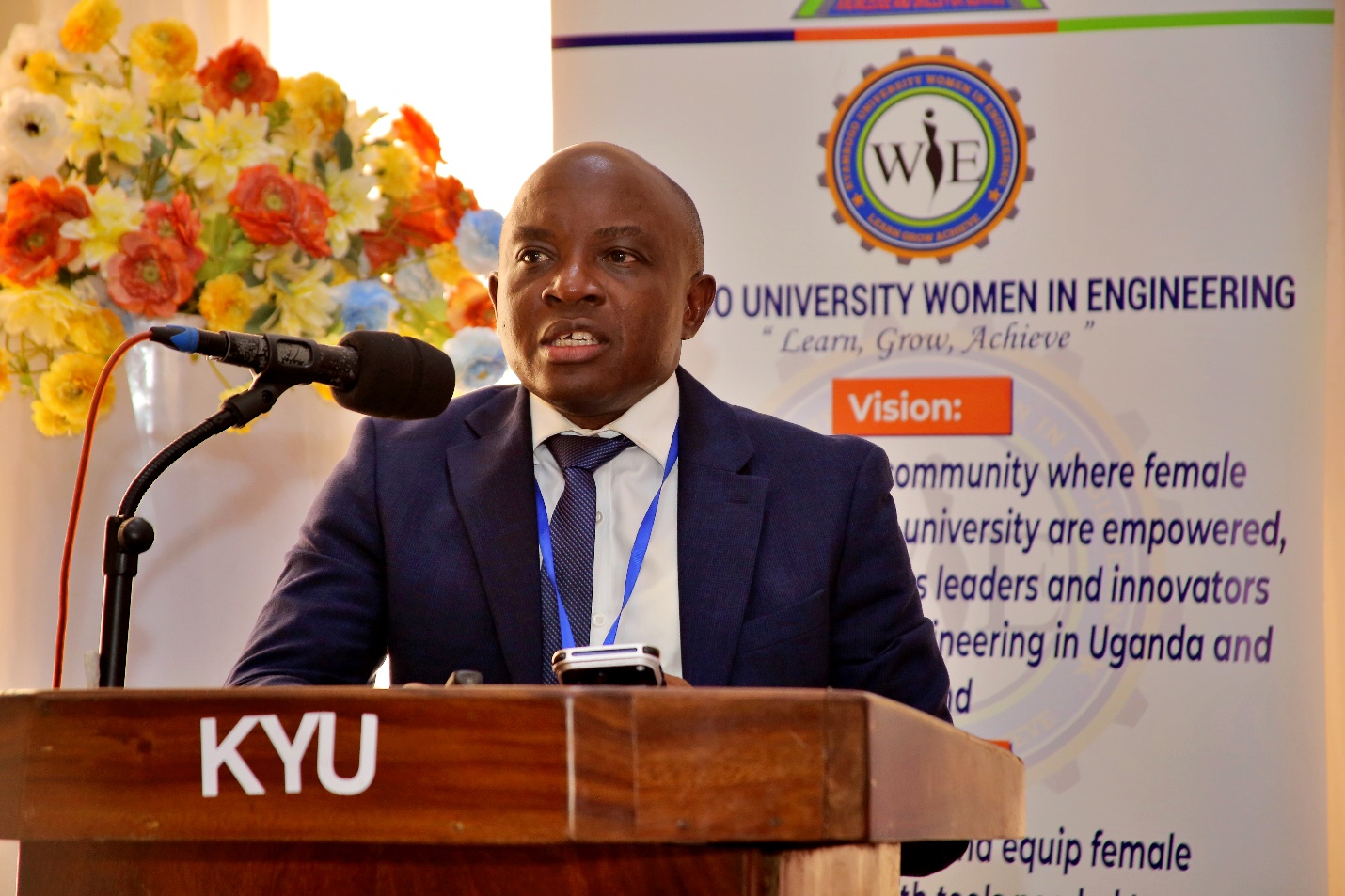
Eng. Mahmmod Lutaya delivered a powerful and insightful keynote address on behalf of the MD. He framed the role of engineers not just as builders, but as stewards of the environment and society. He highlighted the critical role of engineers in achieving the UN Sustainable Development Goals (SDGs) and shared practical examples from NWSC’s operations, emphasizing the need for water efficiency, energy recovery, and innovative infrastructure management. He challenged the students to move beyond traditional thinking and embrace a holistic, systems-based approach to problem-solving, urging them to become leaders in the green transition.
Panel Sessions
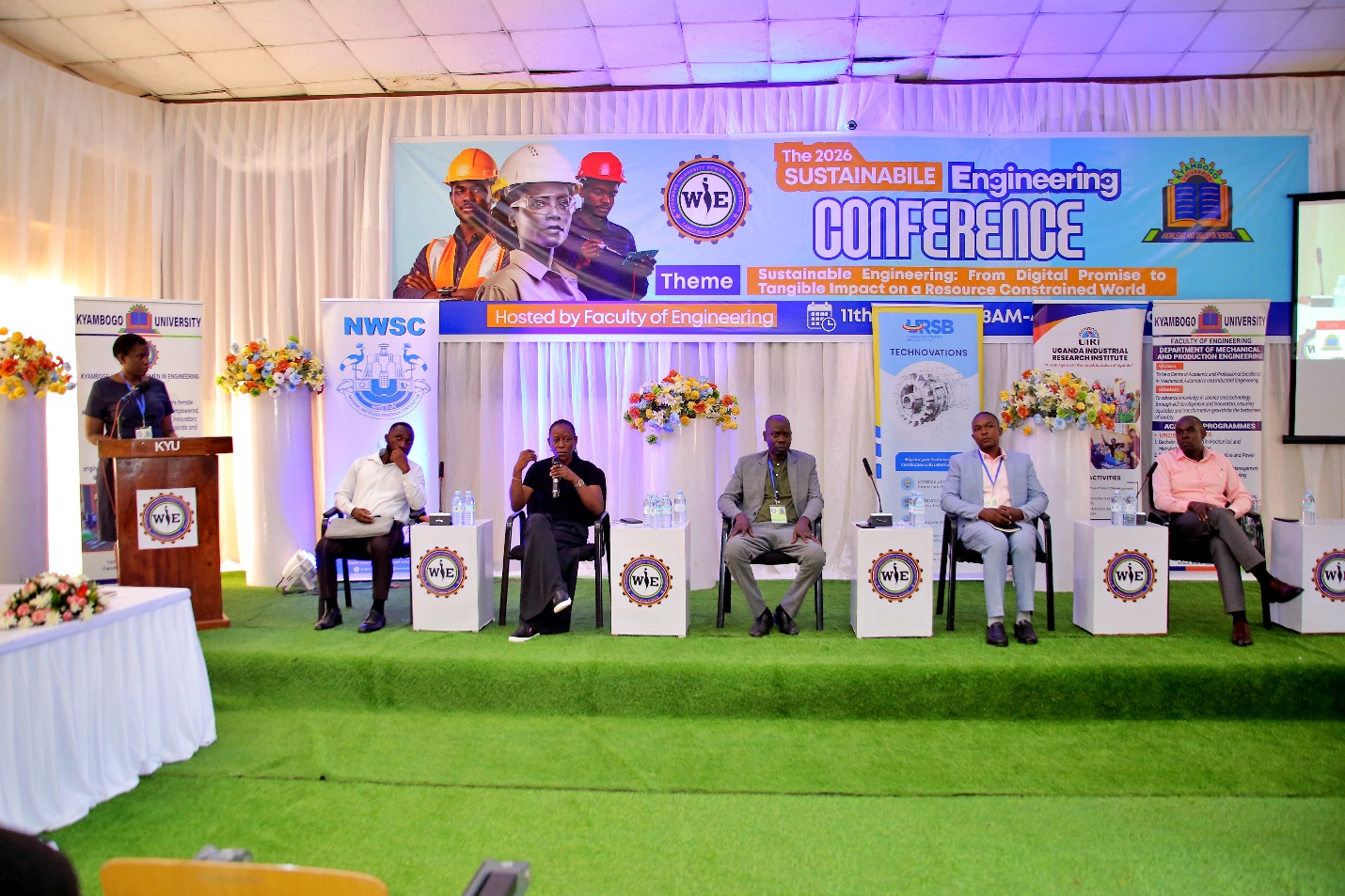
Panel Session 1: Scaling Green Materials & Infrastructure
Sub-theme: Building a Circular Future: Innovative Materials and Resilient Infrastructure for Sustainable Development
Moderator: Dr. Catherine Wandera
Panelists: Manufacturing Industry practitioners
The first panel session focused on the shift from a linear “take-make-dispose” model to a circular economy. Panelists discussed:
- The development and application of alternative, low-carbon building materials (e.g., recycled materials, bamboo, geopolymers).
- The need for designing infrastructure that is resilient to the impacts of climate change, such as floods and extreme heat.
- Challenges and opportunities in scaling up green technologies, including policy incentives, industry standards, and cost-effectiveness.
- The importance of collaboration between academia, industry, and government to drive the adoption of sustainable materials.
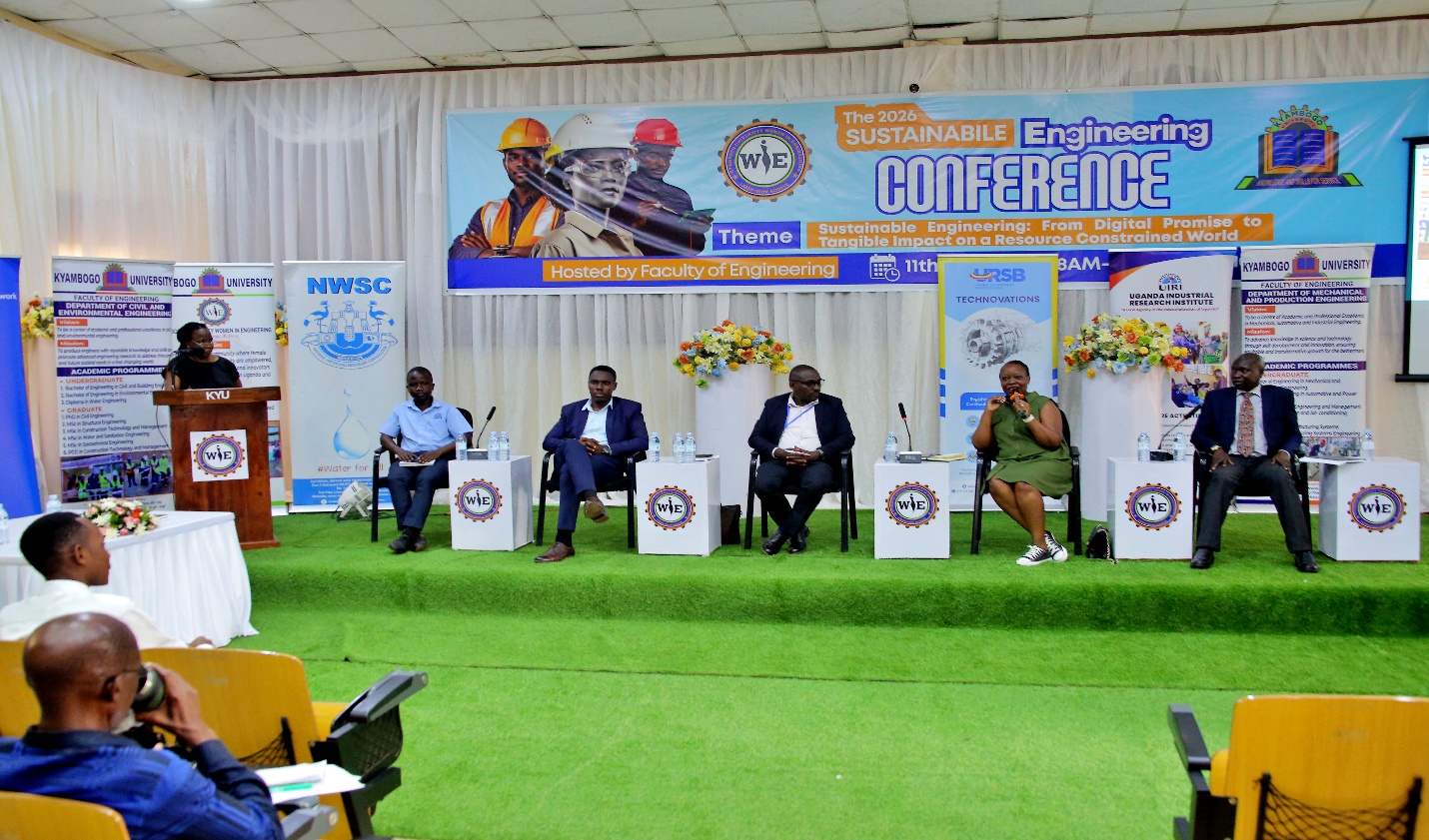
Panel Session 2: The Energy-Water-Food Nexus
Sub-theme: Integrated Engineering Solutions for Food, Water, and Energy Security in a Changing Climate
Moderator: Dr. Eng. Anne Nakagiri
Panelists: Government bodies
This session addressed the critical interdependencies between energy, water, and food systems. Key discussion points included:
- The role of integrated engineering solutions in optimizing resource use, such as using wastewater for irrigation, solar-powered pumping systems, and energy recovery from agricultural waste.
- Policy and regulatory frameworks needed to support nexus-based approaches.
- The impact of climate change on each of the three sectors and the need for adaptive strategies.
- Case studies of successful nexus projects in the region and the lessons learned.
Special Presentation: The Importance of Value Addition
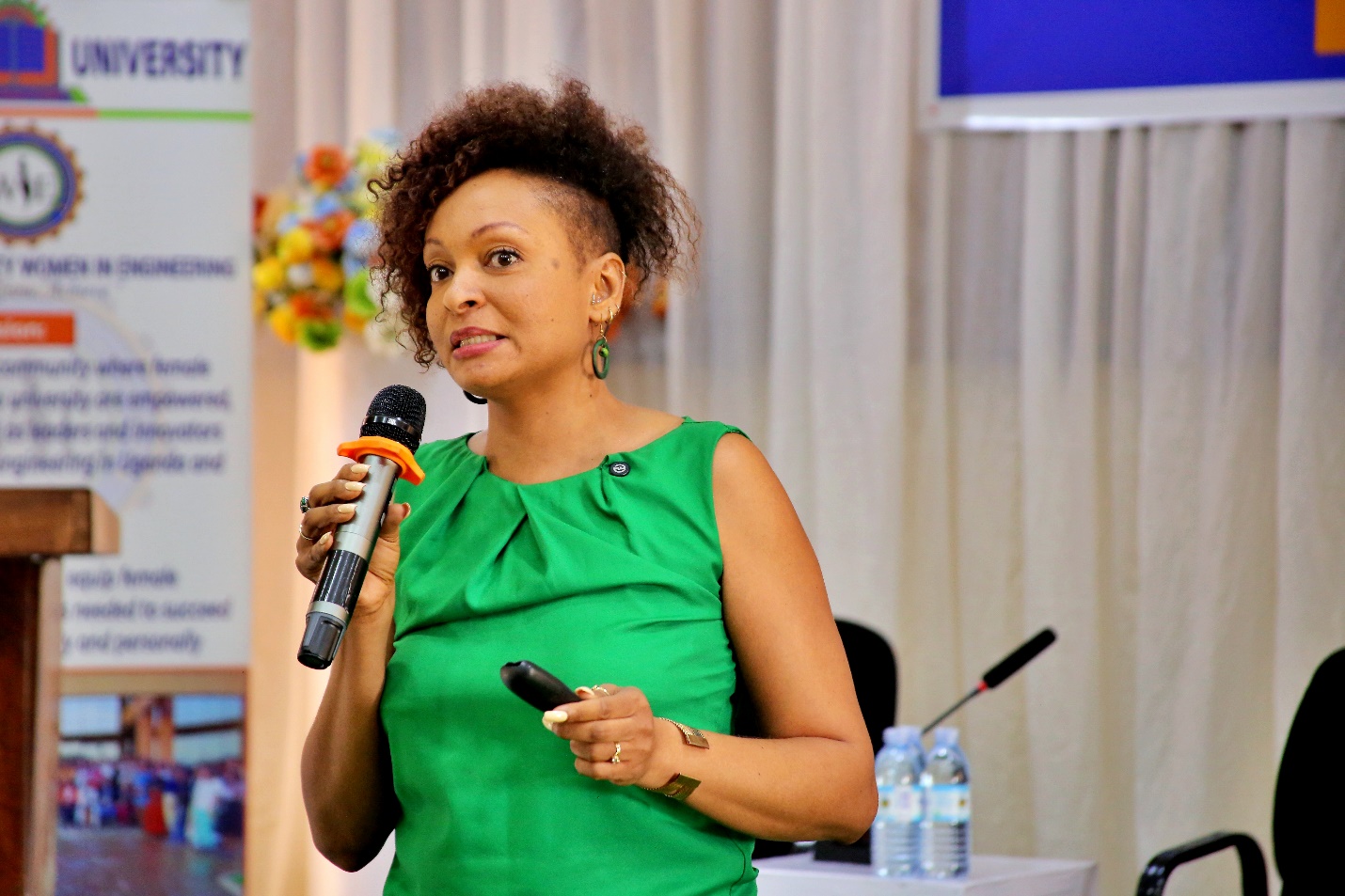
Speaker: Mrs. Nargis Shirazi Baguma
This presentation highlighted the economic and social benefits of adding value to raw materials locally. Using examples from the agriculture and manufacturing sectors, Mrs. Baguma explained how value addition could create jobs, increase export earnings, and reduce reliance on foreign markets, all while promoting more efficient use of resources.
Presentation: Engineering Students’ Innovations and Intellectual Property (IP)
Speaker: Uganda Registration Services Bureau (URSB)
This session was crucial for the student attendees. The representative from URSB provided a comprehensive overview of the different types of intellectual property (patents, trademarks, copyrights, industrial designs) and the process of registering them in Uganda. The presentation emphasized the importance of protecting one’s innovative ideas and the potential for students to turn their projects into commercial ventures.
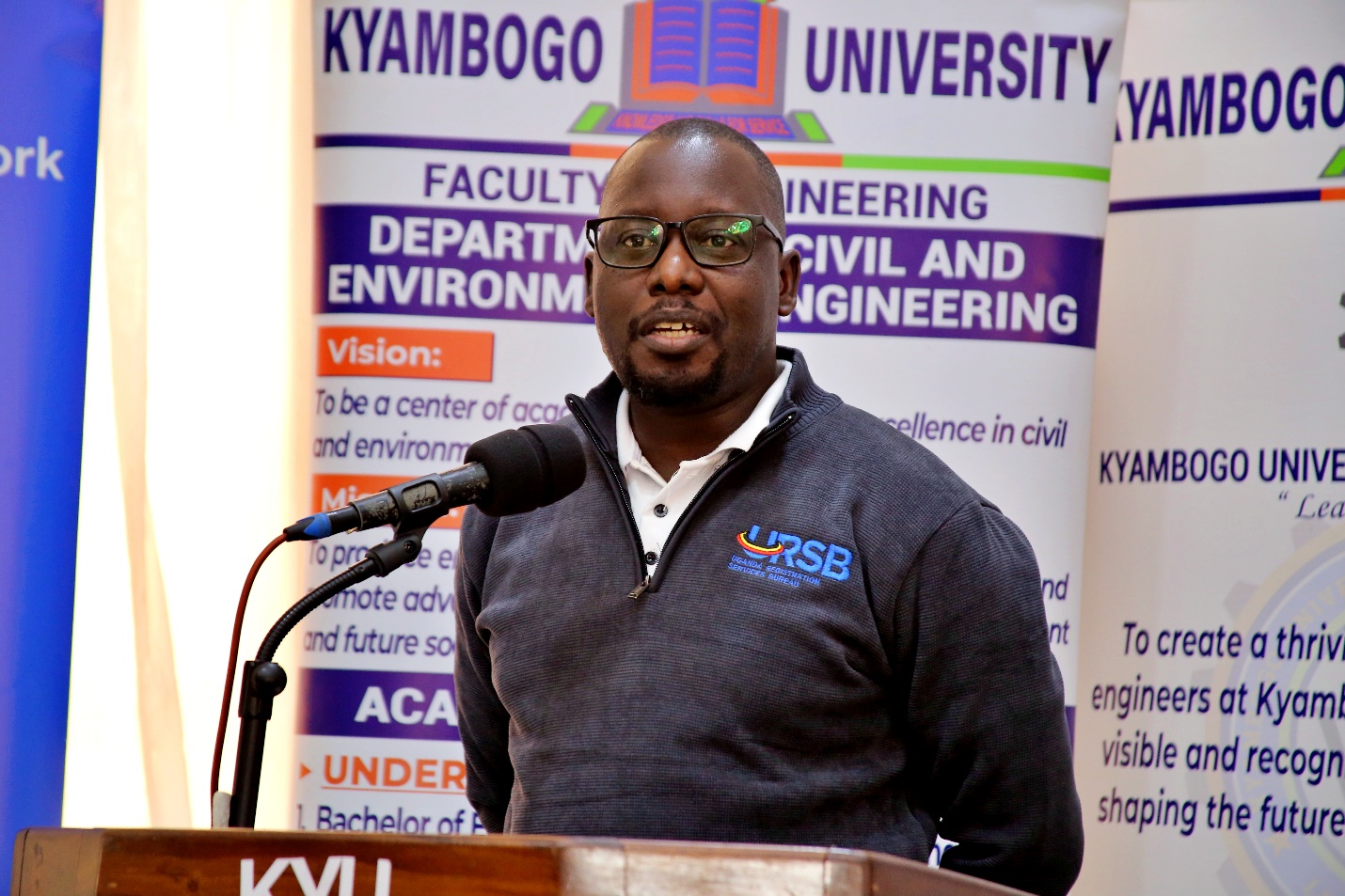
Presentation on Welding and Fabrication Technology: Counsel Shamirah Namutebi gave an insightful presentation on the latest trends in welding and fabrication, highlighting how these foundational engineering processes are becoming more advanced, efficient, and sustainable through the use of automation and new materials.
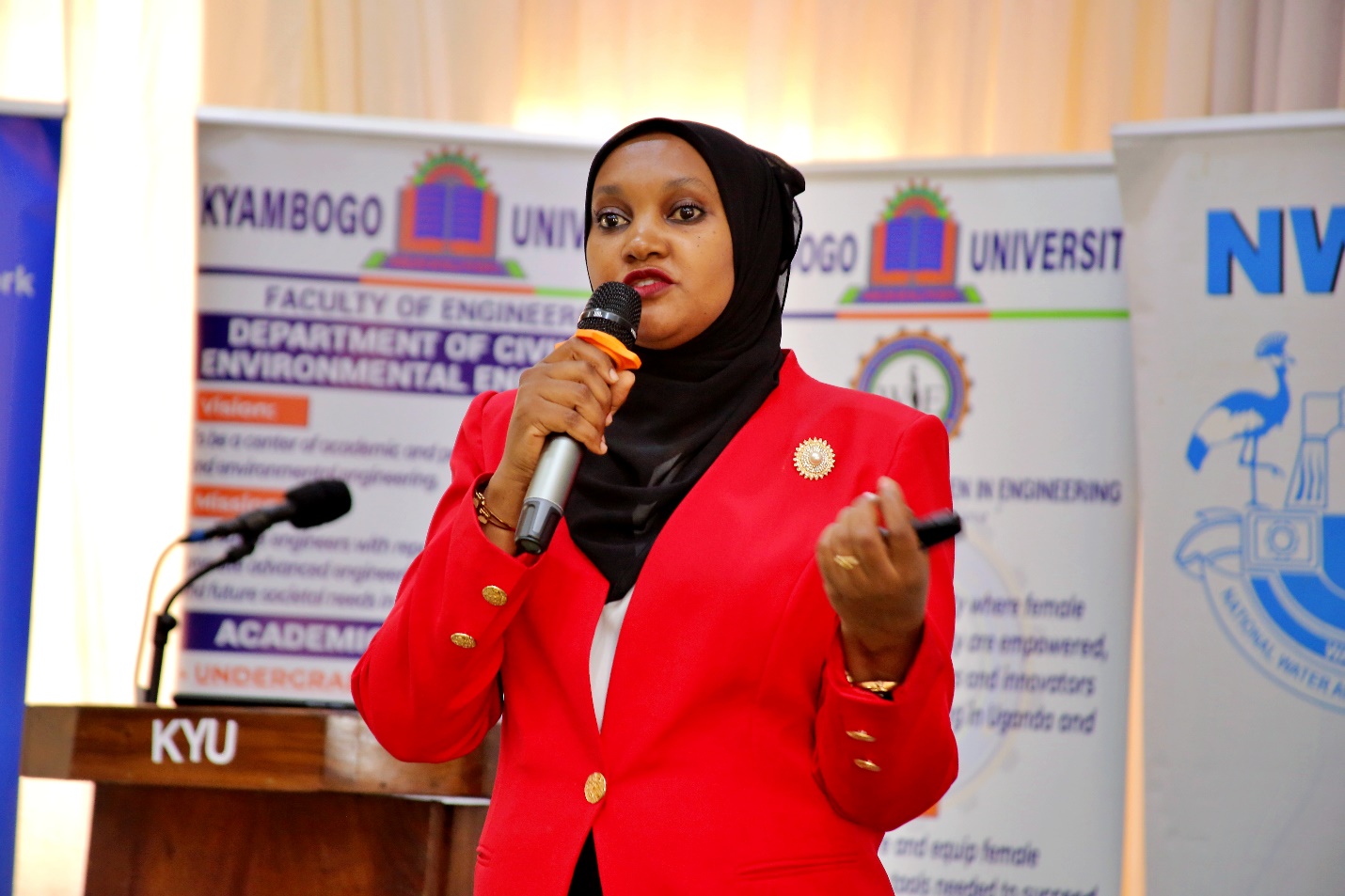
Engineering Students’ Innovations: Mrs. Mercy Kitimbo Asiku led a session where students presented their own innovative projects. This showcased the practical application of the knowledge gained in their study at the university and highlighted the creativity and problem-solving skills of the students.
Networking and Closing
The conference concluded with a dedicated networking and tea session. This provided an invaluable opportunity for students to connect with the professionals, academics, and government officials who spoke at the event, fostering mentorship and potential career opportunities.
Key Takeaways:
- Systems Thinking is Essential: The Energy-Water-Food Nexus clearly demonstrated that modern engineering challenges cannot be solved in isolation. A holistic, systems-based approach is crucial.
- Circular Economy is the Future: There is a clear and urgent need to move towards a circular economy in infrastructure and manufacturing, with a focus on innovative green materials.
- Protect Your Ideas: The session with URSB empowered students with the knowledge to protect their intellectual property, a vital step towards commercialization.
- Collaboration is Key: The conference highlighted the necessity of strong partnerships between academia, industry, government, and students to achieve sustainable development goals.
Acknowledgement
The success of the 2026 Sustainable Engineering Conference would not have been possible without the dedication and hard work of the KYUWE cabinet, the support of the Faculty of Engineering and the University Administration, and the generous contribution of time and expertise from all our guest speakers, panelists, and moderators. Their insights and commitment to empowering the next generation of engineers are deeply appreciated.