
The landscape of urban farming in Uganda is shifting from a hobby of necessity to a sophisticated, data-driven business. At the heart of this transformation is the Resilient Urban Food Systems (RUFS) Project, part of the broader AgriFose 2030 initiative. With Kyambogo University serving as a critical hub for knowledge and coordination, the project is empowering local farmers to move beyond subsistence and into the world of commercial agribusiness.
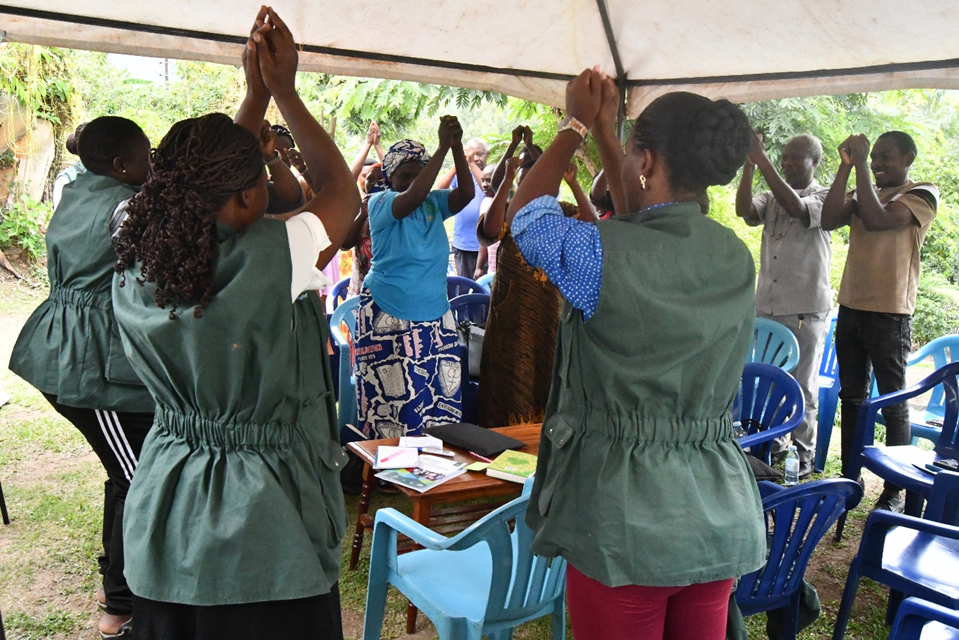
Professor Frank Mugagga, a lead at the RUFS project and Professor of Environmental Geography at Makerere University, emphasizes that the current phase of the project is about more than just planting seeds it’s about strengthening the human networks behind the food systems. “We realized that many farming activities were going on, but they weren’t as energetic as we expected. We decided to target strengthening partnerships, connecting farmers to partners, and leveraging digital platforms to give farmers a bigger voice,” says Prof. Mugagga.
In one of its engagement models, the project utilizes an Integrated Farmers’ Training model that dives deep into: Bookkeeping, encouraging farmers to write and share their stories and Training farmers to use TV, radio, and social media to find markets.
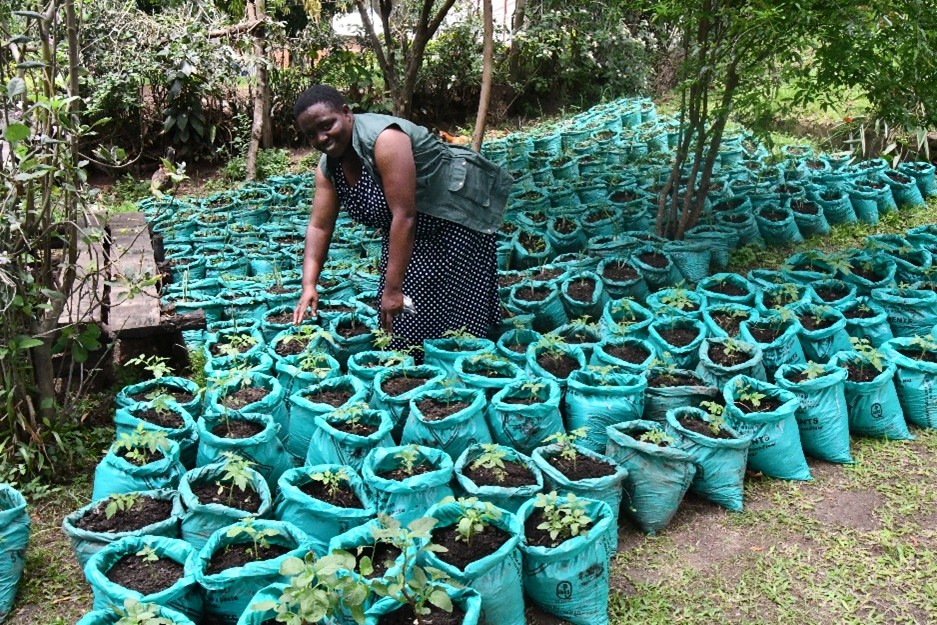
In Kilembe Division, Kasese Municipality, retired teacher Eunice Mutoro Sunday is a living testament to the RUFS project’s impact. As the coordinator for the Mother’s Union and owner of SUNICE Urban Farm, Eunice was motivated by a desire to fight childhood stunting. “I started with around ten potted gardens to see if I would be successful,” Eunice shares. “Through the RUFS project and advisors like Dr. Mukwaya and Professor Mugagga, I moved from growing for home consumption to securing commercial tenders with companies like Serengeti Energies.
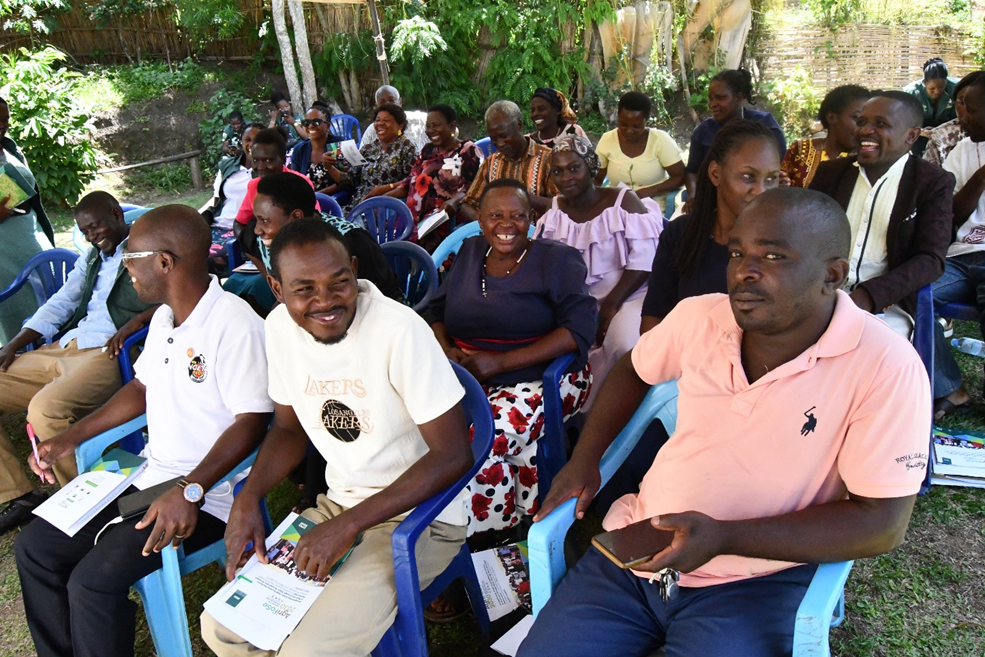
The RUFS project prioritizes the environment through the expertise of facilitators like Henry Stanley Mbowa from Aid Environment. Recognizing that many farmers cannot afford expensive chemicals, the project teaches the creation of organic pesticides and fertilizers. “We use locally available resources like urine, pepper, Tithonia, and animal manure,” Mbowa explains. “We show them how to amplify soil productivity while minimizing costs. Knowledge learned when implemented cannot be forgotten.”
According to the RUFS training modules, every successful urban farmer should maintain:
- Cashbooks and Receipt Books: To track every shilling.
- Input Records: To monitor seeds, manure, and labor.
- Asset Registers: To value land, poultry, and buildings.
A former hotel manager, Wepukhulu Juma (Mbale) used the RUFS project’s guidance to publish a book, “Climate Smart and Resilient Urban Farming”, and now runs a demonstration garden that supplies vegetables to major hotels and schools.
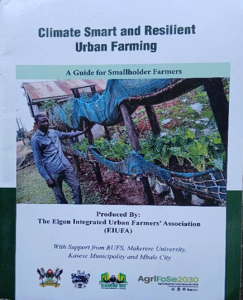
Wepukhulu Juma in his garden and the book
According to Dr. Judith Nagasha, a Senior Lecturer at Kyambogo University who is the AgriFose2030 Uganda Hub leader, the RUFS project has demonstrated that resilience begins with knowledge, grows through community action, and flourishes through innovation. Across Kasese and Mbale, farmers have transformed small urban spaces into engines of nutrition, income, and dignity. “This story reminds us that sustainable food systems are built when people are empowered to learn, lead, and inspire others.” Judith says
The message from the RUFS project and its partners at Kyambogo and Makerere Universities is clear: Start small, stay positive, and treat farming as a refined business. Whether you are a retired professional like Eunice or an aspiring youth like Juma, the soil offers a path to financial independence. As the AgriFose 2030 project continues to build capacity, the “headless chicken” era of uncoordinated farming is over replaced by a resilient, organized, and prosperous farming community.