
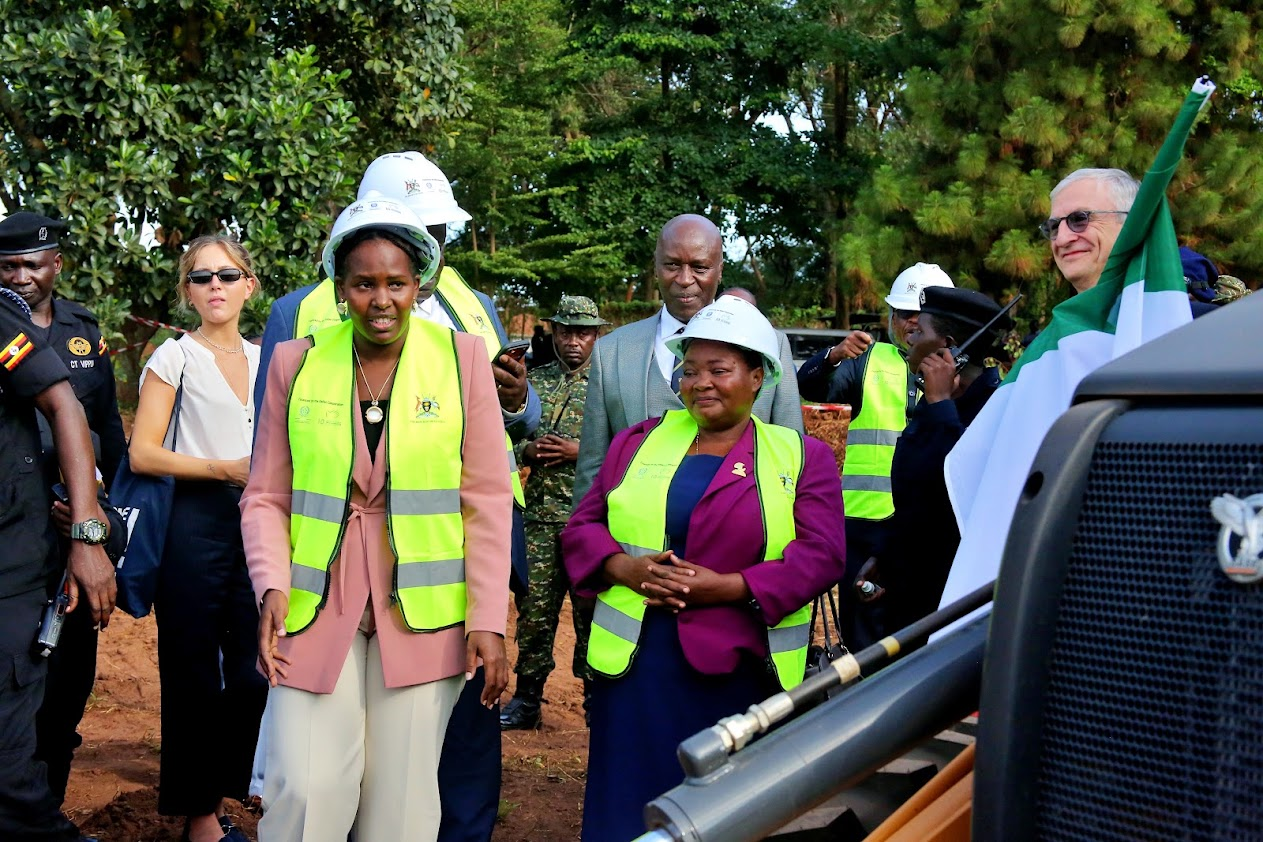
Kyambogo University on Friday, 6 November 2026 marked a significant milestone in Uganda’s agricultural and economic development with the ground breaking ceremony for the Uganda–Italy Coffee Training Centre. The event brought together senior government officials, university leadership, international development partners and representatives of the Italian government in a partnership aimed at transforming Uganda’s coffee industry.
The ceremony was officiated by the Prime Minister of Uganda, Rt. Hon. Robinah Nabbanja and attended by the Vice Chancellor of Kyambogo University Prof. Eli Katunguka Rwakishaya, the Minister of State for Agriculture Hon. Desire Muhooza, and other Ugandan government officials. The Italian delegation included Ambassador Mauro Massoni and Ambassador Riccardo Guariglia Secretary General of Italy’s Ministry of Foreign Affairs and International Cooperation.
In her address, Rt. Hon. Nabbanja underscored the importance of coffee to Uganda’s economy and the livelihoods of millions of households. She noted that the sector supports more than three million smallholder households and that the country’s latest exports had reached a record 8.4 million bags valued at approximately US$2.4 billion.
Her remarks placed the establishment of the Centre within Uganda’s wider ambition to get more value from its agricultural products rather than depend largely on exporting raw commodities.
This position is consistent with the message she delivered during the Uganda–Italy Business and Investment Forum in Rome in October where she encouraged Italian investors to establish processing facilities in Uganda. She emphasised that Ugandans should benefit not only from growing coffee but also from roasting, packaging and marketing the finished product. The underlying message is that Uganda must increasingly move from being a producer of coffee beans to becoming a country that also processes, brands and sells finished coffee products.
For Kyambogo University, hosting the Centre presents an opportunity to contribute directly to the transformation of one of Uganda’s most important agricultural sectors.
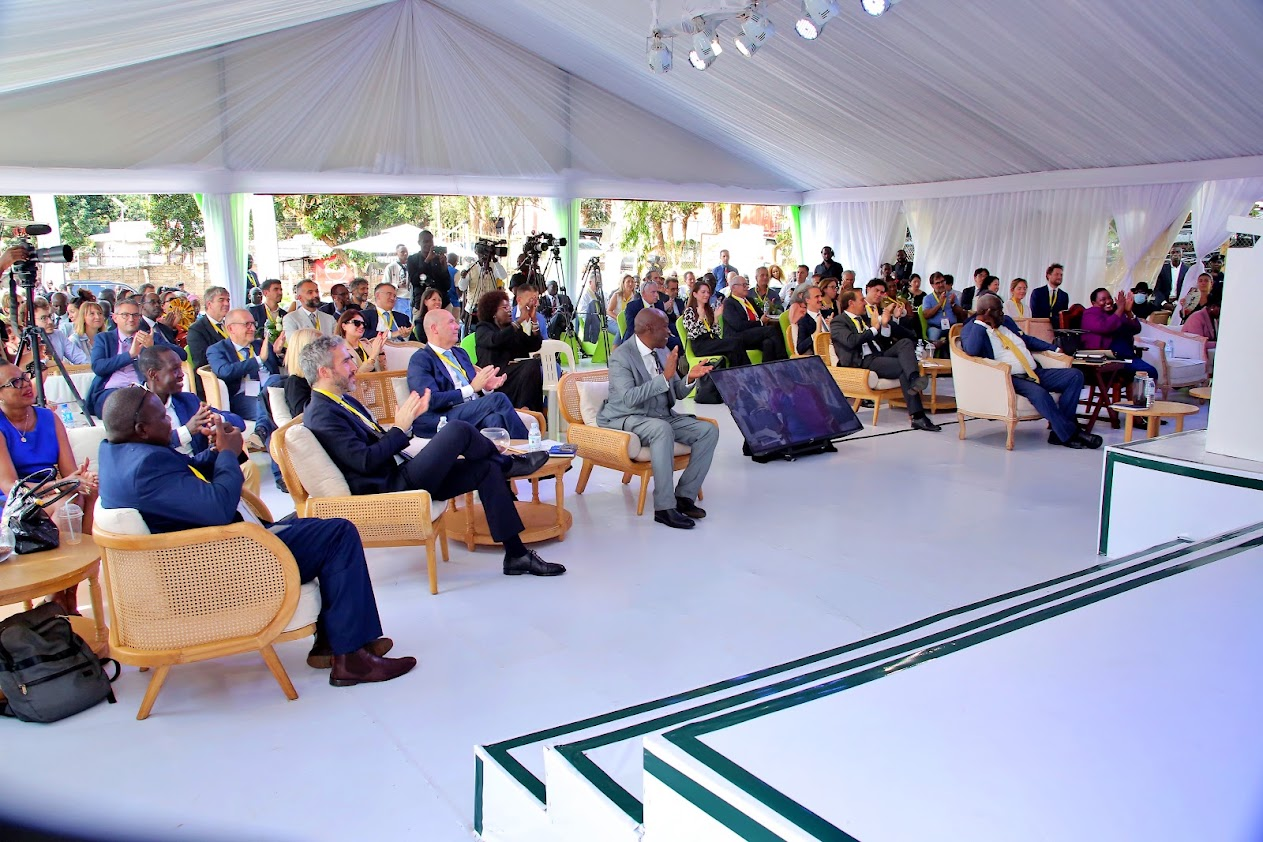
In his remarks following the ceremony, Vice Chancellor Prof. Eli Katunguka Rwakishaya described the partnership as a transformative step towards improving coffee production, strengthening climate resilience and promoting value addition. He expressed pride in the University’s role in providing the skills and research needed to advance the coffee industry. The Vice Chancellor also recognised the importance of the partnership with Italy and appreciated the Prime Minister, Ambassador Mauro Massoni and other distinguished guests for supporting the initiative.
The University’s involvement goes beyond providing space for the facility. It creates an opportunity to connect academic knowledge with the practical demands of the coffee industry through training, research, innovation and engagement with industry players. The Centre is envisioned as an integrated hub for coffee training, practical skills development, roasting and value addition. It will support modern coffee production techniques, sustainable agricultural practices and climate resilience while equipping people across the coffee value chain with relevant knowledge and competencies.
The Italian delegation’s participation reflected the growing cooperation between Uganda and Italy in agriculture, trade, investment and skills development. Through Italian Cooperation and the United Nations Industrial Development Organization (UNIDO), the initiative forms part of the wider Advancing Climate-Resilience and Transformation in African Coffee (ACT Coffee) programme.

The programme is a flagship initiative under Italy’s Mattei Plan for Africa and the European Union’s Global Gateway strategy. It brings together governments, international organisations and private-sector partners to address some of the major challenges facing Africa’s coffee industry. Italy’s international coffee strategy places emphasis on transferring expertise and technology, supporting sustainable investment and strengthening the capacity of coffee-producing countries to retain more value from their products.
This approach was also highlighted by Italy’s Deputy Minister of Foreign Affairs and International Cooperation, Hon. Edmondo Cirielli, during the launch of Italy’s international coffee strategy in October. He emphasised the importance of building a fairer, more sustainable and resilient coffee supply chain through cooperation with producing countries.
UNIDO’s role in the partnership extends to technical assistance, research collaboration, institutional capacity development and mobilising investment to strengthen the coffee value chain.
The importance of the Centre lies in the opportunities it could create for farmers, processors, entrepreneurs and young people.

For many years, Uganda’s coffee industry has been recognised for its production potential. However, improving productivity alone cannot guarantee better returns for farmers or a stronger position in international markets. There is also a need to improve quality, processing, traceability, market compliance and local value addition.
The ACT Coffee Programme addresses these challenges through five interconnected areas: value addition, climate resilience, compliance with international standards, research and social inclusion.
In Uganda, the programme works with the Ministry of Agriculture, Animal Industry and Fisheries, the Ministry of Finance, Planning and Economic Development, the Office of the Prime Minister and national coffee-sector institutions. The Centre is expected to contribute to this wider effort by providing a platform where practical knowledge and technical skills can be developed and shared across the industry.
The ground-breaking ceremony represents more than the beginning of a construction project. It signals a shared commitment by Uganda and Italy to invest in knowledge, skills, technology and the future of a sector that supports millions of livelihoods.
For Kyambogo University, it is another opportunity to demonstrate how partnerships can extend the University’s contribution beyond the classroom and connect education and research to the country’s development priorities.
As the project progresses, its success will ultimately be reflected in the skills acquired by farmers and other industry players, the quality of coffee produced, the growth of local processing and the opportunities created for young Ugandans.
The ambition is to ensure that Uganda does not only grow coffee for the international market, but also develops the expertise and capacity to process it, add value to it and compete more strongly in the global coffee industry.