
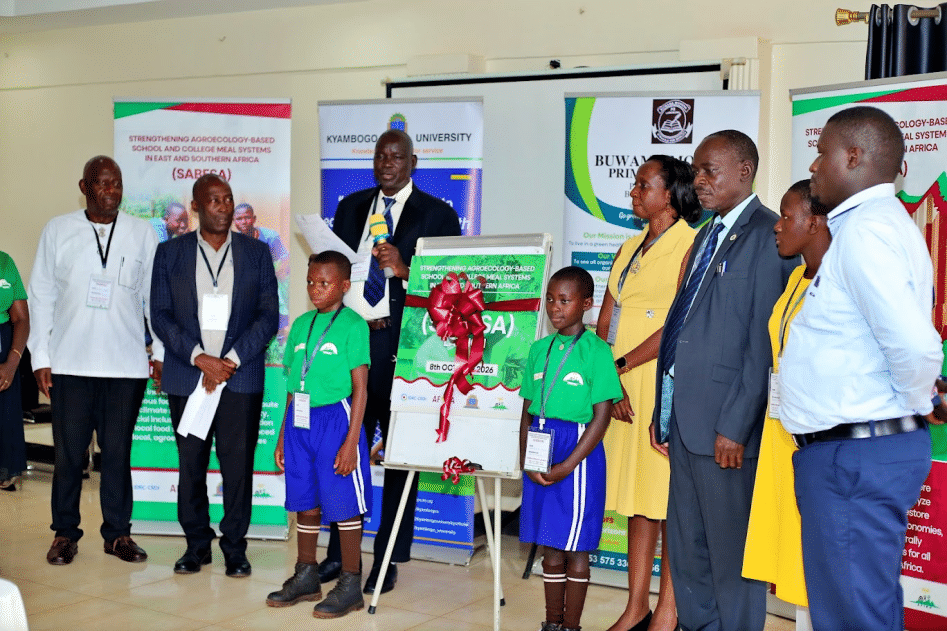
School meals are far more than a mid-day pause in the classroom. When designed thoughtfully, they serve as a powerful engine to improve child nutrition, support academic achievement, and boost local farming economies.
In Uganda, Kyambogo University (KyU) in partnership with African Institute for Resource Development (AFIRD) and Alliance for Food Sovereignty in Africa (AFSA) are spearheading a ground-breaking initiative that is putting this principle into practice: Strengthening Agroecology-Based School and College Meal Systems in East and Southern Africa (SABESA).
SABESA is a 42-month collaborative research project dedicated to driving policy and implementation change across East and Southern Africa. By embedding agroecological practices into school procurement and learning, SABESA bridges four crucial sectors:
- Agroecology — Sustainable farming that works with nature.
- School Nutrition — Access to healthy, wholesome meals for students.
- Local Procurement — Sourcing food directly from nearby producers.
- Farmer Livelihoods — Creating steady, fair market demand for smallholder farmers.
Rather than applying top-down instructions, SABESA will use a participatory approach where schools, farmers, local communities, researchers, and policymakers collaborate, learn, and act together.
To establish a solid foundation for evidence-based policymaking, the Ministry of Education and Sports (MoE&Sports) conducted a nationally representative baseline survey assessing primary school feeding coverage across Uganda.
Primary School Lunch Coverage in Uganda:
[█████████████████████░░░░░░░░░░░░░░░░░░░░░] 46% School Meals
[███████░░░░░░░░░░░░░░░░░░░░░░░░░░░░░░░░░░░] 14% Packed Food
[███░░░░░░░░░░░░░░░░░░░░░░░░░░░░░░░░░░░░░░░] 7% Go Home
[█░░░░░░░░░░░░░░░░░░░░░░░░░░░░░░░░░░░░░░░░░] 3% Canteen
[██████████████░░░░░░░░░░░░░░░░░░░░░░░░░░░░]30% Spend Day Hungry
Access remains highly unequal across Uganda, shaped by geographical disparities, school locations, and institutional ownership types. Nearly 3 in 10 children spend the school day without anything to eat.
At the launch of the project, Mr. Abele Joseph from the Ministry of Education and Sports highlighted key steps Uganda is taking to build sustainable school feeding structures:
- National School Feeding Policy: A comprehensive policy draft addressing both food quantity and nutrition quality.
- National School Feeding Menu: Standardising nutritious meal plans for educational institutions nationwide.
- Quality & Health Standards: Collaborating with the Uganda National Bureau of Standards (UNBS) to enforce strict health and safety protocols.
- School Gardening Guidelines: Partnering with the Ministry of Agriculture, Animal Industry and Fisheries (MAAIF) to integrate hands-on agricultural learning into school yards.
- Local Farmer Procurement: Partnering with the Ministry of Finance (specifically PPDA) to craft tailored procurement guides enabling schools to purchase food directly from local agroecological farmers.
Prof. Bosco Bua, the Director of Research and Graduate Training at Kyambogo University the Co-Principal Investigator SABESA, noted that Kyambogo University will drive the academic research framework to answer and inform policy and implement change. This research project will connect four areas: agroecology, school nutrition, local procurement, and farmer livelihoods and the approach will be participatory: schools, farmers, communities, researchers and policymakers will all learn and act together.
According to AFIRD will serve as the practical bridge connecting research to farm fields and classrooms:
- Community & School Engagement: Identifying target schools and mobilizing community stakeholders.
- Garden & Permaculture Setup: Leading practical agroecology training, establishing school gardens, and delivering nutrition education.
- Farmer Connectivity: Connecting local agroecological smallholders to school procurement networks.
- Action Research & Storytelling: Documenting practical lessons and field stories to inform policy decisions.
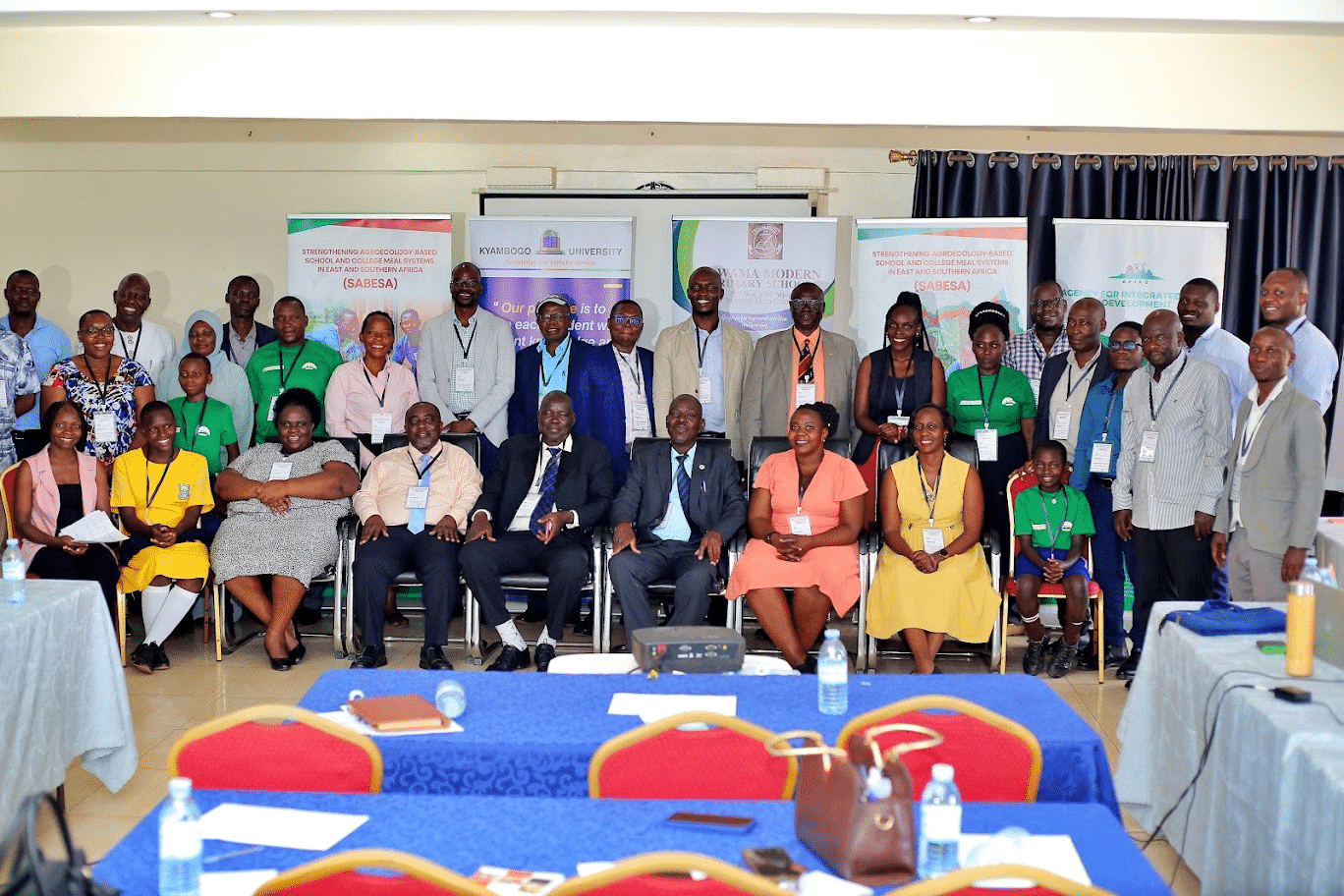
Group photo after the launch
AFSA will leverages lessons learned across Uganda to influence high-level policy discussions and champion agroecological transitions across the African continent.
The SABESA project will demonstrate that school feeding programs can nourish young minds while building resilient food systems across Uganda and the region by bringing together academic research, community mobilization, and regional policy leadership.
Made a call to continue collaborating in research so that we can solve the world challenges together.