
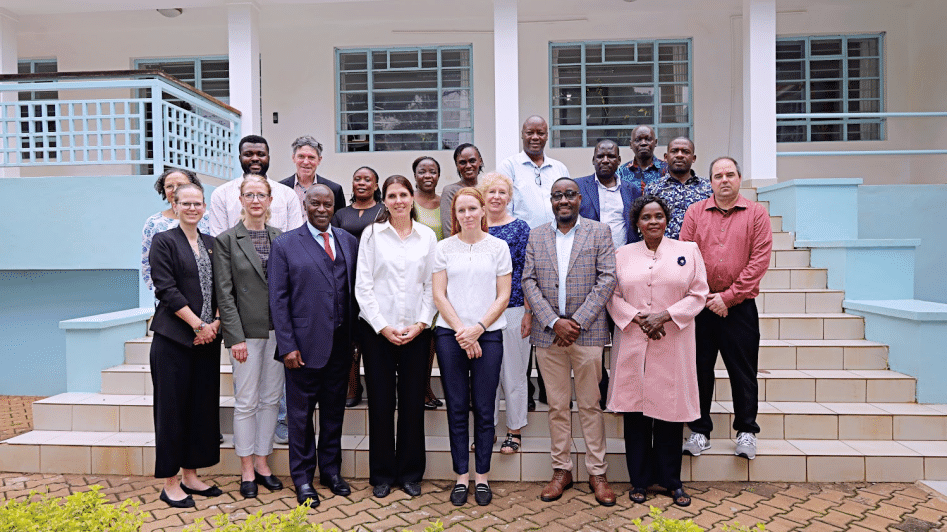
A high-level delegation from Kyambogo University, led by Vice Chancellor Prof. Eli Katunguka-Rwakishaya alongside leaders of the Swedish-funded Agriculture for Food Security 2030 (AgriFoSe2030) programme, has paid a strategic courtesy visit to the Embassy of Sweden in Kampala. Hosted by the Ambassador of Sweden to Uganda, Her Excellency Anna-Maria Olsson, the engagement underscored a shared commitment to turning academic research into tangible policy, commercial agribusiness, and community transformation.
Welcoming the delegation, Ambassador Olsson emphasized that research cooperation remains a vital pillar of the strong bilateral ties between Sweden and Uganda. Noting that Sweden leads globally in university-led research partnerships, she expressed strong enthusiasm for deepening collaboration with Kyambogo University.
Ambassador Olsson outlined Sweden’s current development cooperation priorities in Uganda, highlighting a four-year workplan centered on strengthening trade, renewable energy, transportation, innovation, and AI governance. She noted that these priorities sit alongside Sweden’s enduring commitment to human rights, justice accountability, citizen dialogue, gender equality, maternal health, and job creation particularly within high-potential agricultural value chains such as dairy and coffee.
“Research is such an asset, and there are plenty of opportunities for Kyambogo University and the Embassy to partner on initiatives that contribute directly to the development of both our countries.” H.E. Anna-Maria Olsson, Ambassador of Sweden to Uganda

H. E Anna-Maria Olsson having a chat with Prof. Eli Katunguka and Prof. Elisabeth Rajala
Addressing the meeting, Kyambogo University Vice Chancellor Prof. Eli Katunguka-Rwakishaya head of Uganda’s second-largest public university stressed that academic inquiry achieves its true value only when translated into policy and community impact.
To institutionalize this shift, Prof. Katunguka revealed that Kyambogo University has integrated a mandatory course for all graduate students focused on translating research into policy and practice. Reflecting on positive deliberations held during a recent visit by the Rt. Hon. Jacob Oboth, Speaker of Parliament to Kyambogo, the Vice Chancellor proposed the formation of a unified Platform of Academia and the drafting of a dedicated policy brief to be presented directly to Parliament, ensuring legislators are equipped with evidence-based insights from Ugandan researchers.
Providing context on the programme’s evolution, Prof. Elisabeth Rajala from the Swedish University of Agricultural Sciences (SLU) and Programme Director of AgriFoSe2030, explained that since its inception in 2016, AgriFoSe2030 has worked to bridge the persistent gap between science, policy, and practice. Through rigorous situation analyses and bi-annual project cycles, the programme has transitioned through Phases 1 and 2 into Phase 2.5, establishing dedicated regional hubs in Uganda, Kenya, and Zimbabwe to engage farmers and extension officers directly.
At the heart of the Ugandan operations is the Kyambogo University AgriFoSe2030 Hub, led by Dr. Judith Nagasha. Dr. Nagasha highlighted how the jointly managed hub has transformed local research culture through:
- Co-creation of research with end-users and community stakeholders.
- Theory of Change frameworks and rigorous monitoring and evaluation (M&E).
- Strategic science communication designed to make complex findings accessible to non-academic audiences.
Dr. Nagasha noted that these milestones are positioning Kyambogo University as an emerging Centre of Excellence on Science Translation in the region.
The tangible impact of the Swedish-funded initiative on Ugandan livelihoods was brought to life through testimonies from partner researchers and principal investigators:
- Transforming Smallholder Mindsets: Prof. Frank Mugagga of Makerere University, representing the Rural Urban Food Systems (RUFS) initiative supported by AgriFoSe2030, shared how the programme has connected farming groups in Kasese and Mbale exposing them to market opportunities, the initiative is helping farmers “go beyond subsistence farming to agribusiness.”
- Empowering Women Through Value Addition: Peter Musinguzi, Principal Investigator of the GEMVAM project (funded by Sida under AgriFoSe2030), detailed how targeted training is enabling rural women to commercialize their agricultural output. Through improved production techniques and value addition most notably in ghee processing women entrepreneurs are securing higher incomes and building resilient local enterprises.
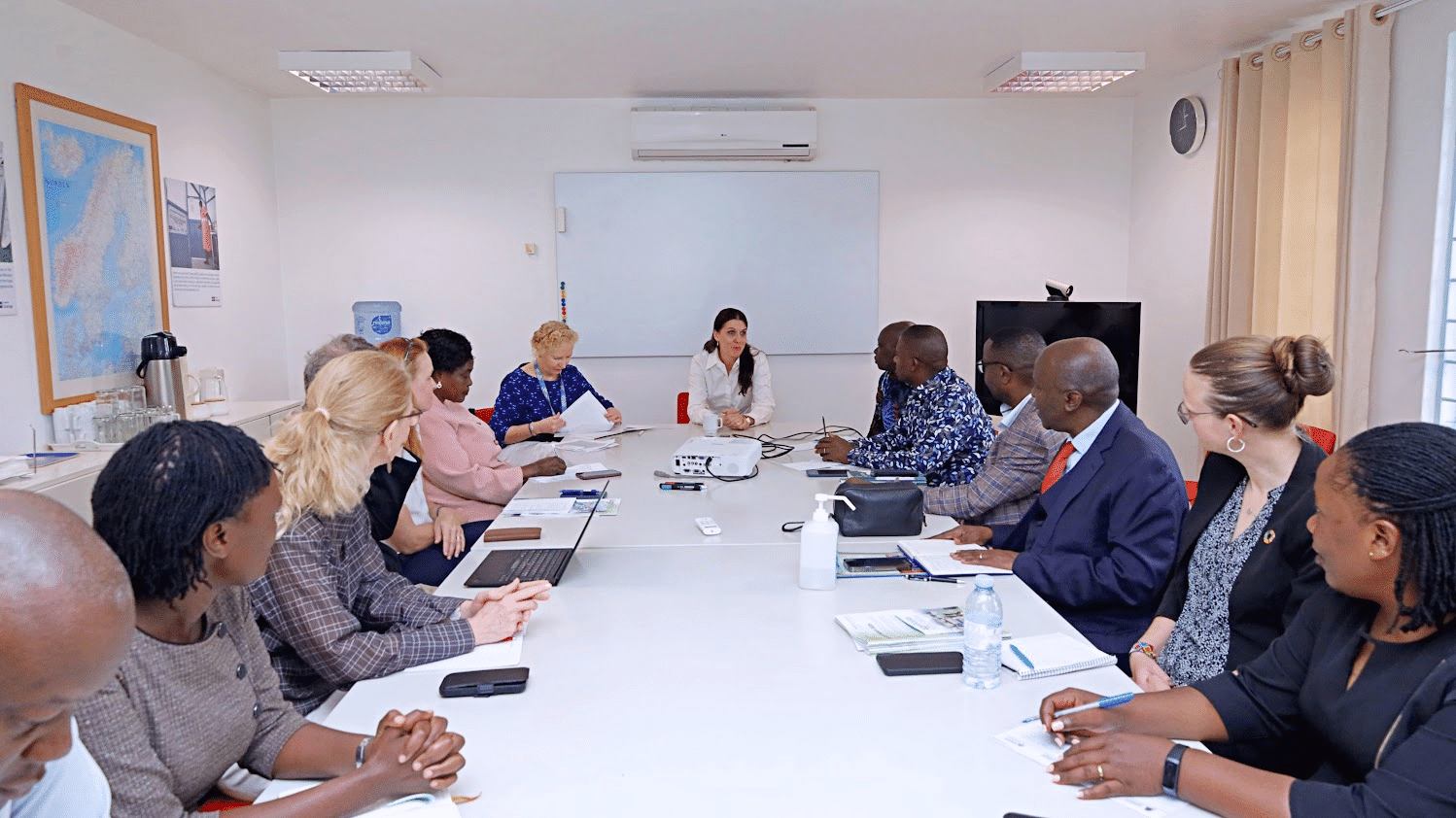
During the meeting
The meeting concluded with a mutual resolve to sustain momentum between Ugandan academic institutions, the AgriFoSe2030 consortium, and the Embassy of Sweden. By aligning university research agendas with national legislative priorities and Sweden’s bilateral cooperation strategy, the partnership is poised to accelerate sustainable food systems, inclusive economic growth, and evidence-based policymaking across Uganda.