
Kyambogo University, in partnership with Kabale University, Uganda Martyrs University, Islamic University in Uganda, UNESCO and the Cross-Cultural Foundation of Uganda, has launched a book on Uganda’s intangible cultural heritage. In the book, scholars and cultural practitioners call for greater efforts to document, modernise and translate cultural knowledge into practices that support communities and national development.
Speaking at the launch, Assoc. Prof. Justus Kwetegyeka, Deputy Vice Chancellor, Finance and Administration at Kyambogo University, representing the Vice Chancellor, Prof. Eli Katunguka-Rwakishaya, described Uganda’s cultural diversity as an important national resource that contributes to national identity and community development. Assoc. Prof. Kwetegyeka said cultural practices should not remain static but should evolve in response to changing social conditions, particularly amid globalisation and urbanisation. “This is not just about a book but about preserving Uganda’s cultural heritage and practice,” he said, emphasising the need to translate cultural knowledge into tangible practices that benefit society. He added that universities have a responsibility to equip graduates with cultural knowledge that addresses Uganda’s societal needs. He urged the university community to raise awareness of academic programmes and research on culture so students can appreciate the richness and relevance of cultural heritage.
Prof. Elizabeth Kyazike, Dean of the Faculty of Arts and Humanities at Kyambogo University and the book’s Chief Editor, appreciated the authors for their resilience in overcoming challenges to publish the book in the shortest possible time. The launch brought together academics, students and cultural enthusiasts, who reflected on the need to preserve cultural knowledge while allowing cultural practices to adapt to contemporary realities.
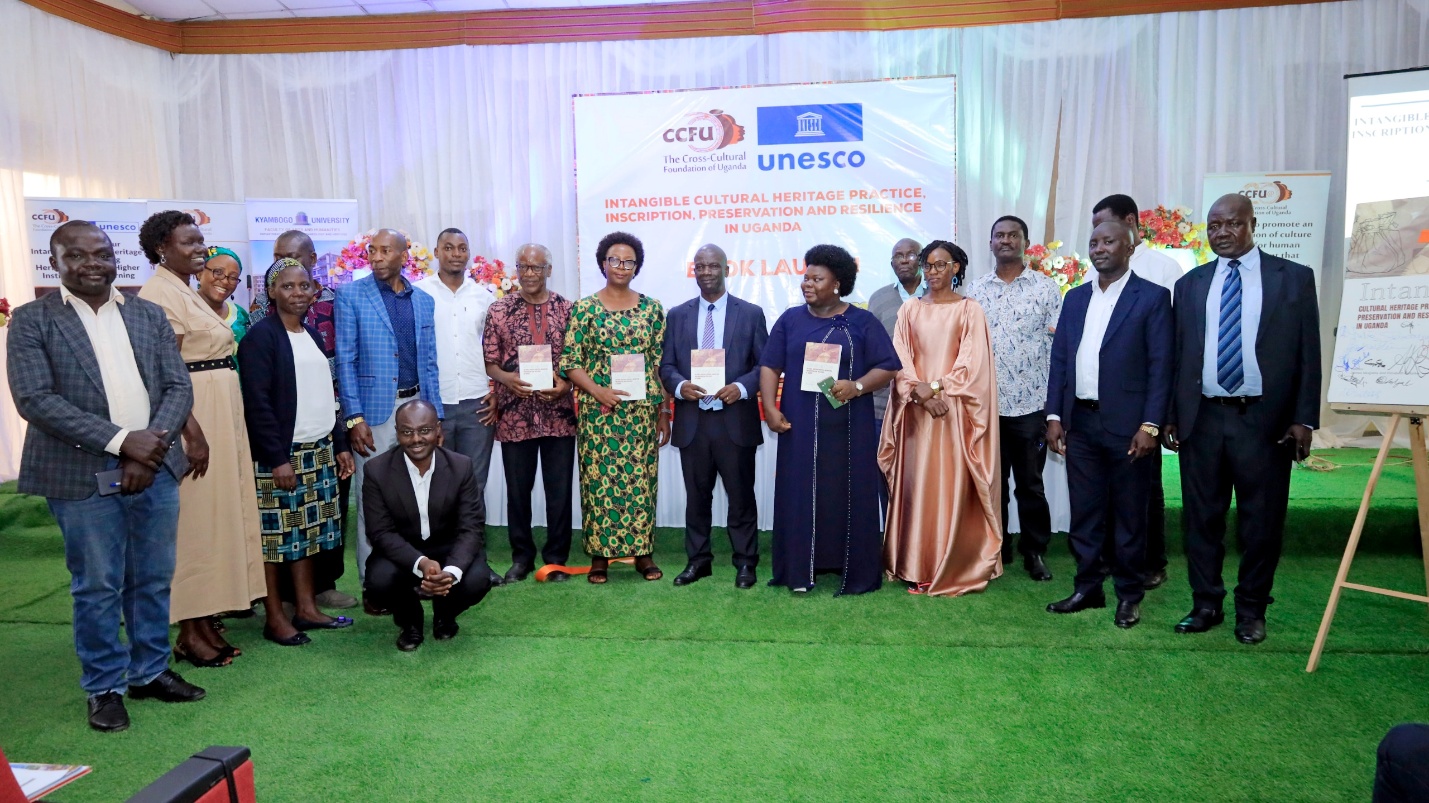
A recurring theme at the event was the need to move beyond viewing cultural heritage solely as something to be preserved. Speakers argued that culture can also contribute to economic growth, livelihoods, social cohesion and community survival when its knowledge and practices are appropriately adapted to contemporary society. Participants further called for efforts to ensure that cultural practices unite communities rather than reinforce stereotypes and divisions. They emphasised the need to critically examine cultural practices, retain those that remain beneficial, and adapt others to changing social circumstances.
Dr Spire Ssentongo, a Senior Lecturer at Makerere University, challenged scholars and communities to recognise, read and cite knowledge produced within African communities rather than relying predominantly on Eurocentric scholarship. He emphasised the importance of Africans documenting and communicating their own histories and cultural experiences. “If we don’t tell our story, the storyteller will choose how they tell our story,” Dr Ssentongo said. He also called for respect for diverse forms of knowledge and encouraged scholars to engage critically with cultural practices while avoiding stereotypes.
The launch served not only as an academic celebration but also as a call for renewed attention to Uganda’s cultural knowledge. Speakers emphasised that documenting intangible cultural heritage, making it accessible to younger generations, and adapting it to contemporary needs could help ensure Uganda’s diverse cultural traditions remain relevant in a rapidly changing society.