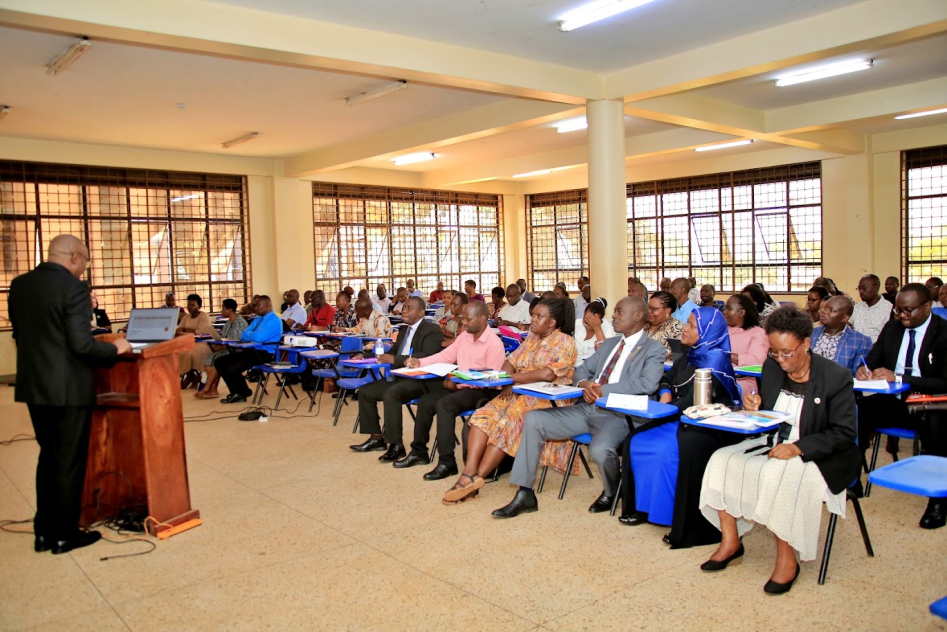
Kyambogo University has officially launched its landmark Competence-Based Education and Training (CBET). Running under the theme, “Empowering Teaching Staff with Competence-Based Education and Training to Harness Practical Skills for Enhanced Graduate Competence and Workplace Relevance,” this initiative marks a massive paradigm shift in Uganda’s higher education landscape.
The countdown to 2027 began in January 2020, when the Ministry of Education and Sports (MoES) rolled out the revised, learner-centered O-Level curriculum and the pioneer cohort of that revolution is currently in Senior Six. To ensure continuity, the Ministry has already aligned the A-Level curriculum. Now, the baton has been passed to universities. Higher institutions must radically transform how they teach and assess students before these pioneer learners arrive at university gates in 2027.
The launch responds directly to a national deadline issued by Ministry of Education and Sports: No university in Uganda will be permitted to admit students for the 2027/2028 academic year if they have not fully implemented a competence-based curriculum.
In response to the directive from the MoES and implementation guidelines issued by the National Council for Higher Education (NCHE), Kyambogo University has taken a proactive, dual-pronged approach:
- Mandatory CPD: Developing a comprehensive CBET Programme as a mandatory Continuous Professional Development (CPD) course for all teaching staff.
- Academic Accreditation: Creating a formal Graduate Certificate Programme to be accredited by the NCHE.
Unlike traditional theory learning, CBET is an outcome-oriented, learner-centered approach. It shifts the spotlight from what a student knows on paper to what they can actually do.
CBET is an educational approach focusing heavily on a blend of knowledge, practical skills, attitudes, and real-world abilities. It utilizes authentic assessment methods rather than rigid, memory-based exams, effectively fostering lifelong learning and immediate workplace readiness.
Speaking on the core purpose of the training, the Deputy Vice Chancellor Academic Affairs, Prof. Maria G.N Musoke emphasized that the program aims to equip teaching staff with the explicit tools required for CBET implementation. She noted that the ultimate goal is to professionalize university teaching to guarantee quality, relevance, and ultimate graduate employability.
Kyambogo University will undergo intensive training divided into two distinct phases. Phase 1 will be running from June 17th – July 7th 2026 with CBET 6101: Foundations of Higher Education Instruction, CBET 6102: Competence-Based Curriculum Design, CBET 6103: Competence-Based Teaching & Assessment. Phase 2 will run from December 14th –18th 2026 & Jan 4th –15th 2027 with CBET 6104: Educational Technology, CBET 6105: Professionalism and Ethics, CBET 6106: Inclusive Education.
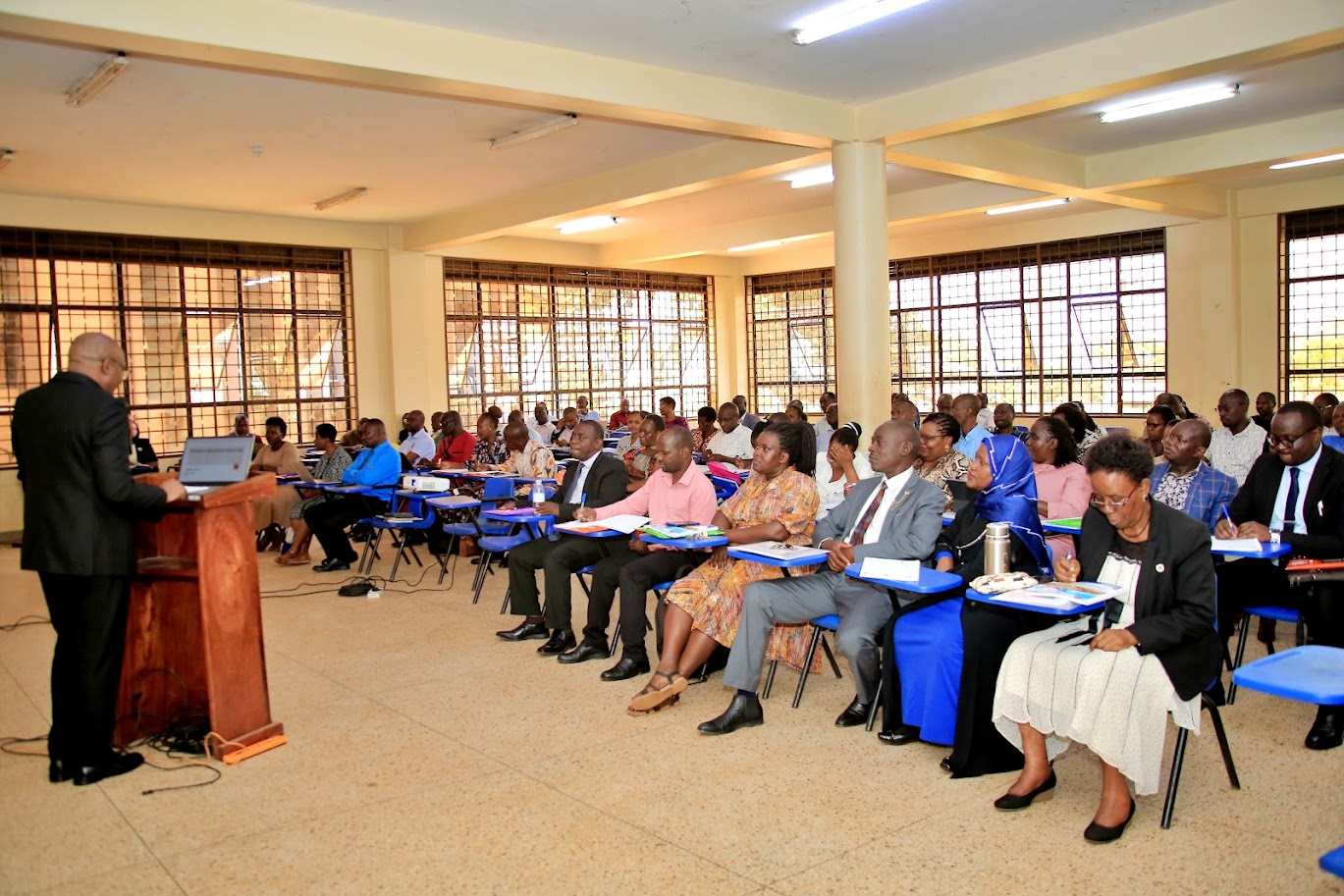
Participants that include Deans and HOD’s, exam coordinators attending their first session.
The Vice Chancellor, Prof. Eli Katunguka while delivering his welcome remarks, proudly noted that while Kyambogo University is already renowned for its strong teaching, research grants, and pedagogical training, adding CBET to the mix is the missing puzzle piece. Prof. Katunguka directly addressed the corporate world’s outcry over unemployable graduates. “Students complete university, but they are not employable. They lack critical soft skills. This new curriculum is going to address these challenges by instilling adaptability, flexibility, emotional intelligence, time management, accountability, and a positive attitude right from the classroom.” Prof. Eli Katunguka
The Chief Guest, Mr. Timothy Ssejjoba, Commissioner University Education and Training at Ministry of Education and Sports representing the state minister for Higher Education, expressed his excitement and commended Kyambogo’s Council and Management for swiftly embracing the national agenda. He described the launch as both timely and critical, emphasizing that lecturers themselves must first possess top-tier skills to teach excellently under the new framework. “Changing the way we learn is ultimately about changing the way we think about education,” Timothy remarked. “We need graduates who can make immediate, positive impacts in their communities. The ultimate success of this program will not be measured by certificates, but by job creation, and the transformation of Uganda.”
With the launch of this mandatory training, Kyambogo University firmly positions itself as a trailblazer, ensuring that by 2027, its staff will be fully equipped to mold a new generation of skilled, practical, and highly employable Ugandan graduates.
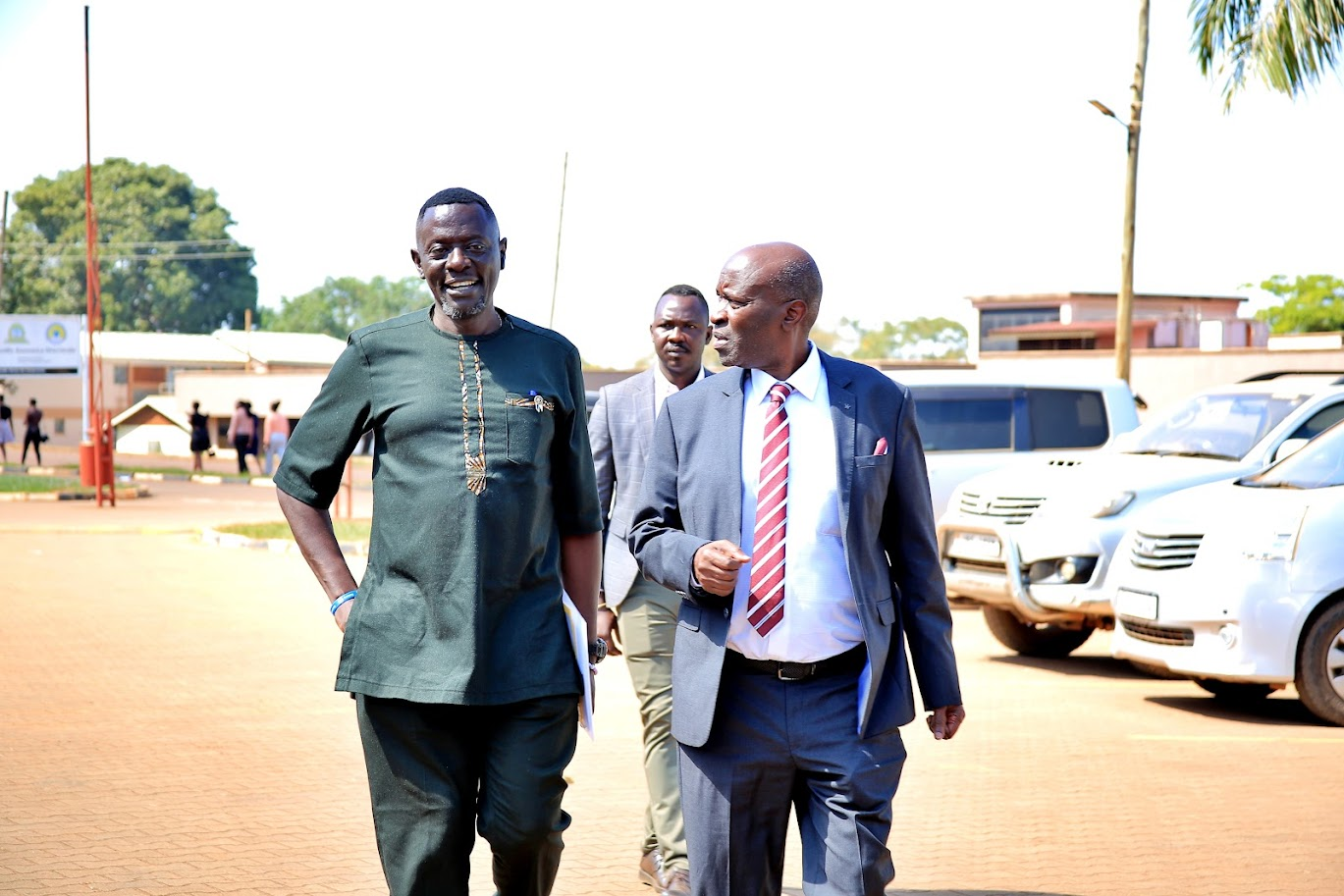
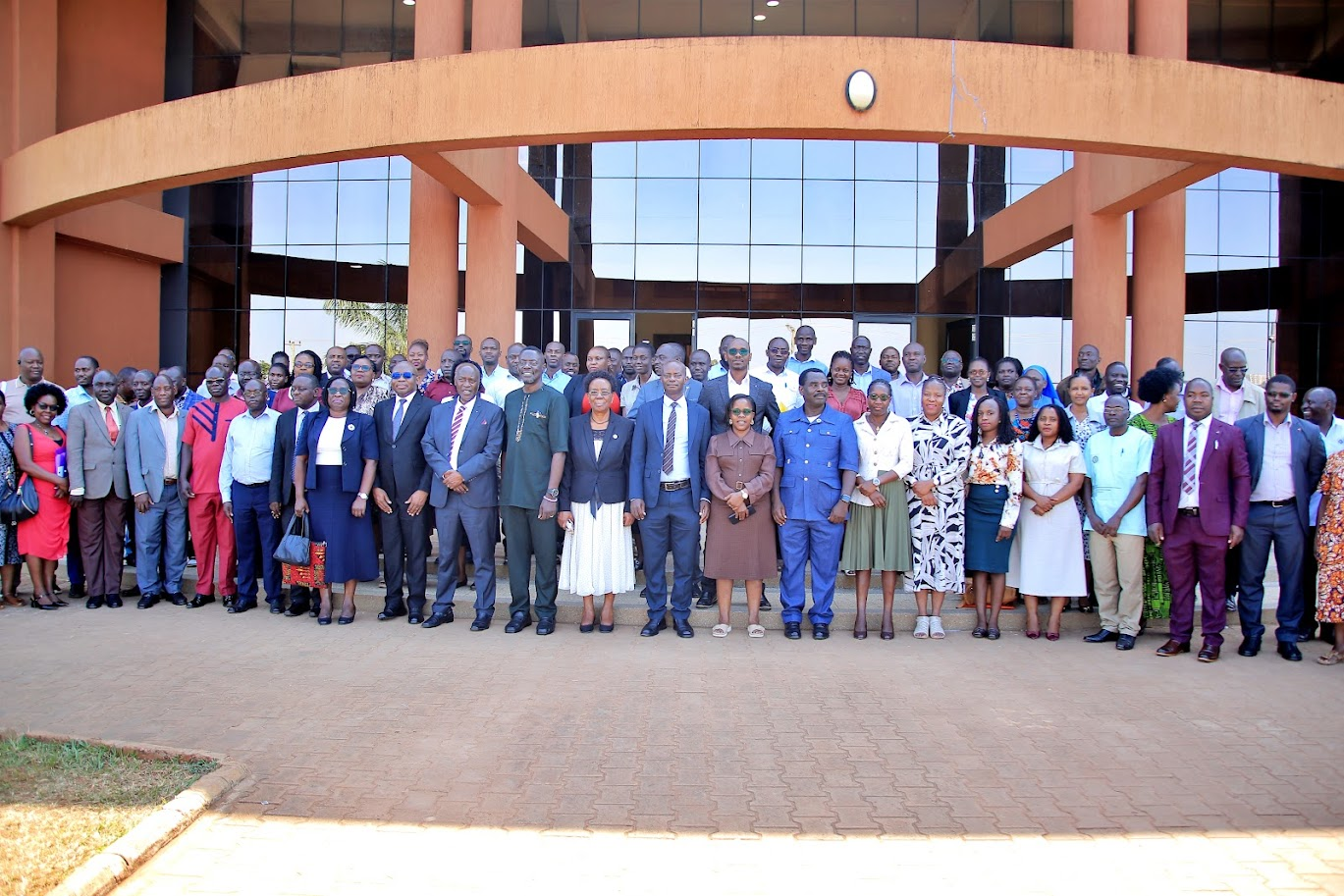
The Vice Chancellor, Prof. Eli Katunguka and the Chief Guest, Mr. Timothy Ssejjoba, Commissioner University Education and Training at Ministry of Education and Sports arrive to officiate the event.